You spend much of the day sitting. When you sit on the mat and fold forward, tight hamstrings may limit your movement, your spine may round, and you may pull on your feet to go farther. Your lower back may begin to feel uncomfortable. A forward fold without rounding back starts with a different goal: the pose is not a shape to force, but a movement to develop gradually. When the hips stop moving, the spine may round to take up the extra range. Repeatedly forcing this position can aggravate symptoms, especially if you already have back pain. Aim for a controlled fold that feels manageable rather than pulling yourself deeper.
Why Paschimottanasana Lower Back Pain Starts in the Pelvis, Not the Spine
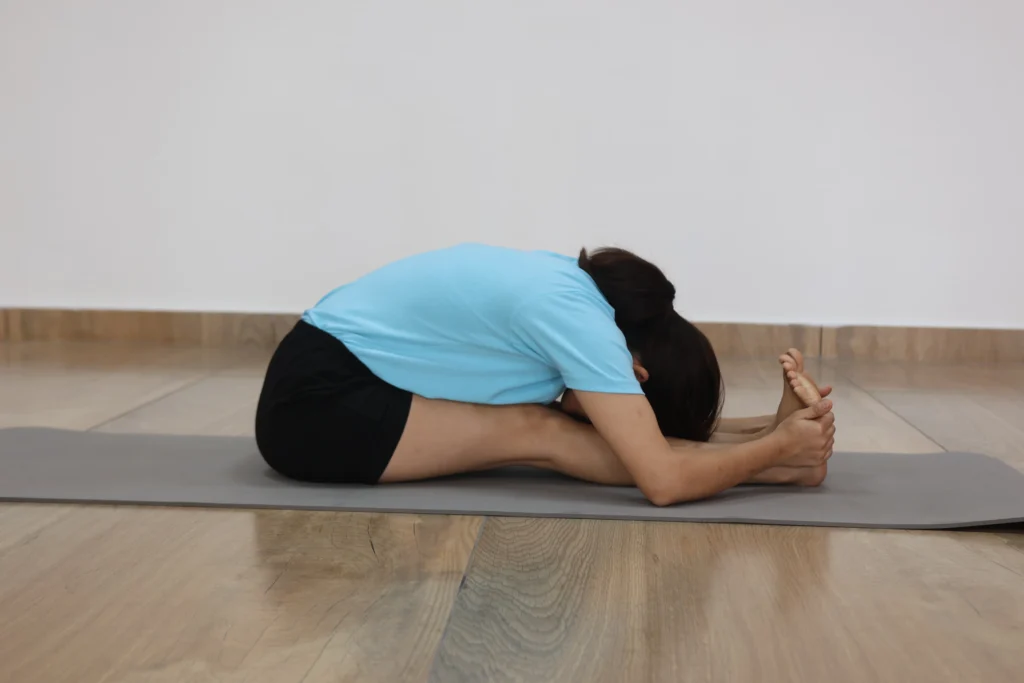
Lower-back discomfort in Paschimottanasana can occur when the pelvis stays tucked under and the lower spine rounds to make up for limited movement at the hips. The hamstrings attach to the sit bones, and their tension can make it harder for some people to tilt the pelvis forward. This may flatten the lower back and encourage the torso to move forward by rounding the spine. The cause of pain varies, so do not assume tight hamstrings are the only explanation.
A controlled fold begins at the hip joints. The pelvis rotates forward over the thighbones while the hamstrings and other tissues lengthen. The hip flexors and quadriceps can help control the movement. If the hips stop moving, the spine may round to create more range, so fold only as far as you can maintain a comfortable, controlled position.
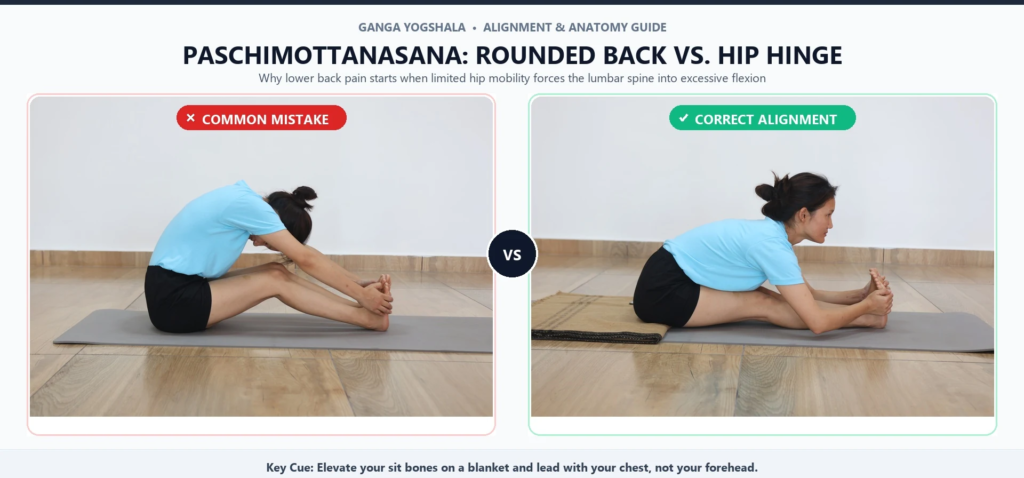
That shift matters because spinal flexion under load can increase forces on spinal tissues. Pulling hard on the feet may add more force when the back is rounded. However, rounding does not automatically mean that a disc, ligament, or sacroiliac (SI) joint is being injured. Avoid forceful pulling, move gradually, and stop if you feel sharp pain or symptoms travelling down a leg.
Desk work makes this pattern worse. Long hours of sitting keep the hamstrings in a shortened, unchallenged position and teach the pelvis to sit in a tucked posture by default. If you are looking for yoga for tight hamstrings, the first task is not to stretch harder. It is to change where the movement happens.
Warm Up the Hips, Ankles, and Spine Before Loading the Fold
The joints that need preparation are the hips, the ankles, and the upper back, in that order. The hips must be able to hinge. The ankles and calves affect how much tension reaches the back of the leg. The upper back must be able to extend so the chest can lift while the pelvis tilts forward. Three short drills cover this.
Seated pelvic rocks. Sit on a folded blanket with your legs extended. Place your hands on your thighs. Tilt the pelvis forward until the lower back arches slightly, then roll back until it rounds. Repeat 8 to 10 slow rounds. This teaches your body the difference between hip movement and spinal movement, the skill the whole pose depends on.
Ankle and calf mobilization. Flex and point the feet 10 times, then draw slow circles in each direction. Press the heels away so the calves lengthen. Tight calves add tension to the hamstring chain and make the knees lock.
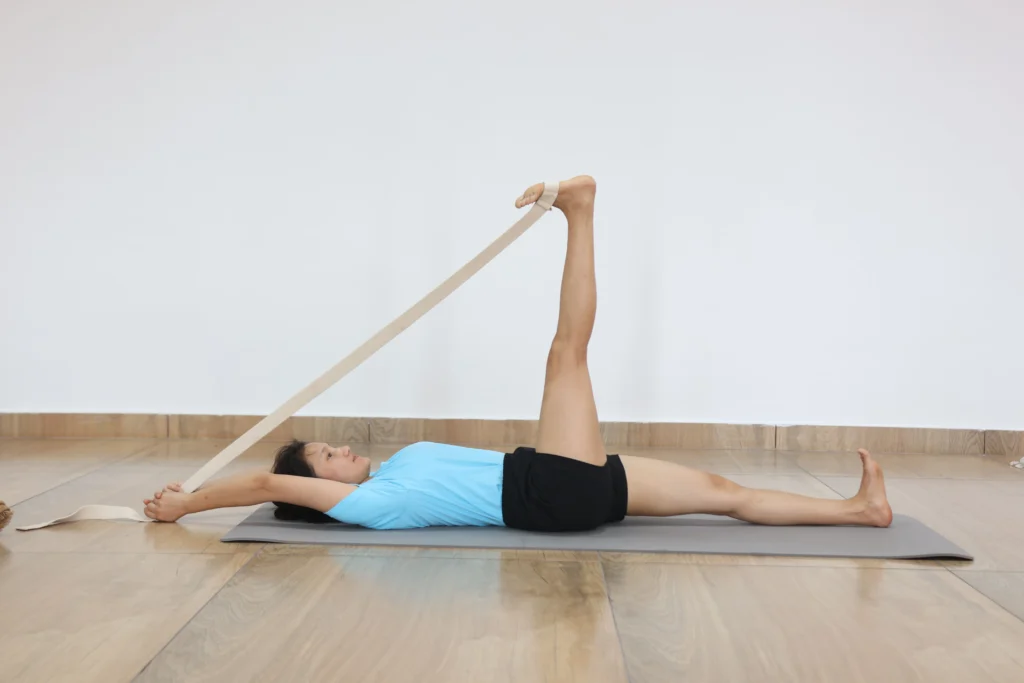
Supine leg raise with a strap. Lie on your back and loop a strap around one foot. Raise the leg until you feel a mild stretch in the back of the thigh, keeping the opposite leg long on the floor. Hold for five breaths per side. Because your spine is supported by the floor, you can lengthen the hamstring without any rounding of the lower back.
The repetition counts here are practical suggestions, not research-derived prescriptions. Adjust them to how your body responds.
How to Practice a Forward Fold Without Rounding Back Using Props
Props work as anatomical bridges. They bring the floor, or your feet, to the range of motion you have now, so the correct joint does the work. They are not a sign of weakness. In the Iyengar tradition of alignment, a prop is chosen to make a precise action possible, not to make the pose easier for its own sake. Three setups address the most common restrictions.
Anterior Pelvic Tilt Yoga Setup: Sit on a Block or Folded Blanket
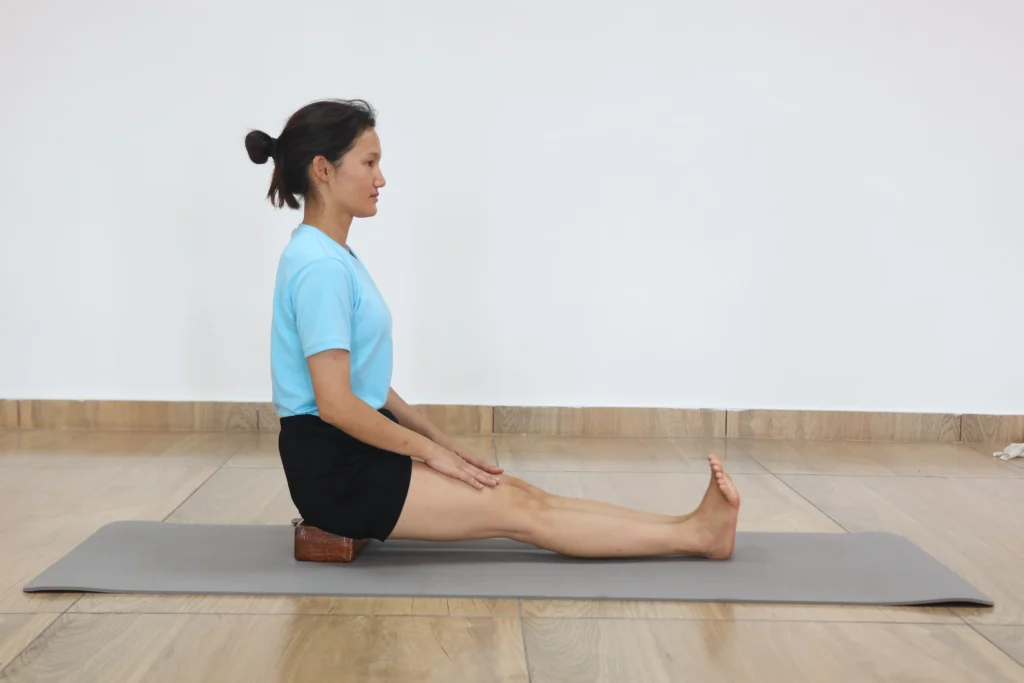
Raise your sit bones on a folded blanket or a yoga block. Place the sit bones near the front edge of the support, with the tailbone hanging slightly behind it. Start with a lift of about two to four inches and add height until the front of your hip creases opens and you feel a small natural curve in your lower back. The right height is the one where your pelvis tips forward without effort.
Elevation lets gravity assist the pelvic tilt. With the hips above the knees, the hamstrings no longer pull the pelvis backward as strongly. Press the thighs down, flex the feet, and keep the kneecaps pointing at the ceiling.
Paschimottanasana with Strap: Place It Along the Metatarsal Heads
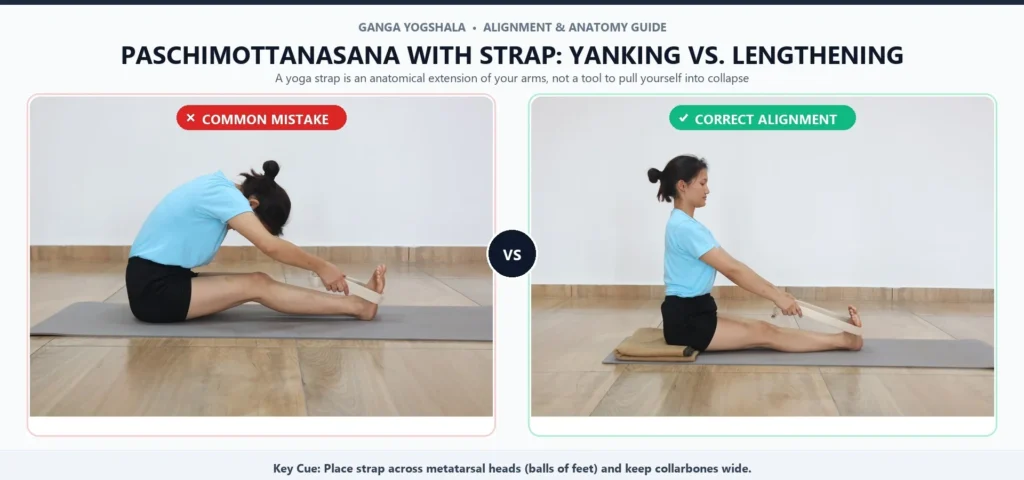
Loop the strap around the balls of both feet, across the metatarsal heads and not the toes. Hold it with straight arms and let the elbows draw slightly back. The strap is a lever for lengthening the front of the torso, not a rope for hauling yourself down.
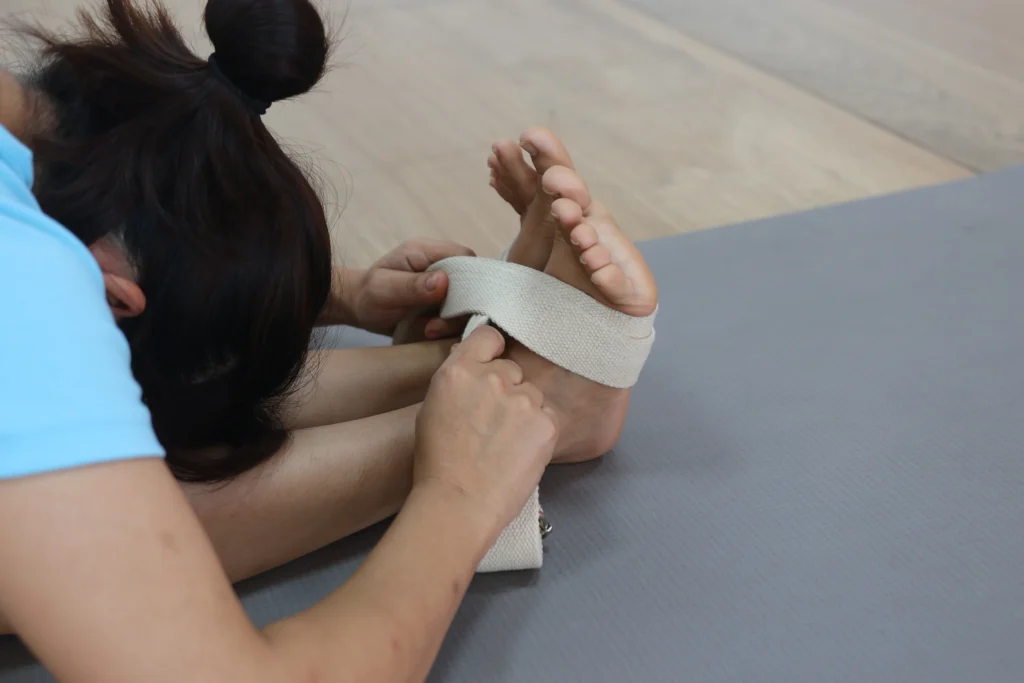
Lengthen the strap until you can sit tall with a flat or gently arched lower back. If holding the strap makes your spine round, the strap is too short. Lift the sternum and move the ribs forward, then fold only as far as the spine stays long.
Bolster Under the Forehead for a Supported Hold
Once you have reached your honest end range with a long spine, place a bolster or stacked blankets across the thighs and rest your forehead on it. This lets the neck release and removes the urge to pull. The hamstrings can then lengthen gradually through sustained, quiet tension. If the backs of the knees feel strained, slide a rolled blanket under them.
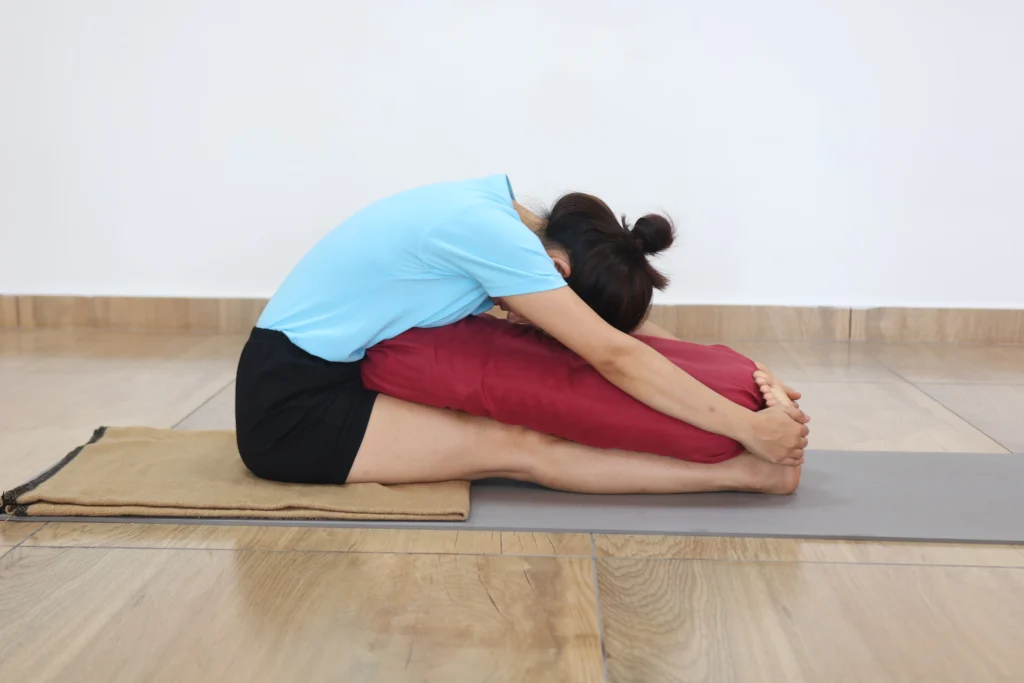
For more guided practice with these setups, Ganga Yogshala offers live online yoga classes that include prop-based variations of seated folds.
Why Hamstrings Burn and Tremble in a Seated Forward Bend
Your hamstrings may burn or tremble when they are working while lengthened. Your nervous system also influences how much stretch you tolerate. Trembling can occur with muscular effort or fatigue, but it is not possible to tell the cause from that sign alone. Ease out if the sensation is strong, painful, or unusual.
Stretching research in the physical therapy literature suggests that much of the early gain in flexibility comes from your nervous system allowing more range (called stretch tolerance), not from the tissue becoming longer. That is why gentle, repeated exposure often works better than force.
You need to separate productive sensation from warning signals.
Productive sensation is a broad, dull pull in the belly of the hamstring or calf. It eases as you breathe and stays in the same place.
Danger signals include:
- Sharp pain in the lower back, especially when rounding
- A pinching or deep ache at the SI joint or the back of the pelvis
- Tingling, numbness, or burning that travels down the leg, which can indicate nerve tension
- Sharp pain exactly at the sit bone, which can indicate strain at the hamstring attachment
If any of these appear, come out of the pose, raise your seat height, bend the knees, or stop. If the symptoms persist after practice, consult a qualified healthcare professional.
The 5-Point Alignment Checklist for a Forward Fold Without Rounding Back
Check these beside your mat before and during the pose:
- Pelvis: Sit bones are on the front edge of the support, and the pelvis tilts forward, not backward.
- Spine: The lower back keeps a gentle inward curve, and the chest leads the movement.
- Legs: Thighs press down, kneecaps face up, and feet are flexed with the strap on the metatarsal heads.
- Arms: Elbows are straight or softly bent, and you are not pulling your torso with your arms.
- Sensation: The stretch is in the muscle belly, with no sharp, pinching, or traveling sensations.
Frequently Asked Questions
Why does my lower back hurt when I do a seated forward fold?
Pain usually means your lower spine is bending to make up for tight hamstrings and a tucked pelvis. Raising your hips on a block or blanket and keeping the spine long shifts the load back to the hip joints.
Is it better to keep my knees bent in Paschimottanasana?
Yes, if bending the knees allows your pelvis to tilt forward and your spine to stay long. A slight bend is a legitimate adjustment, and it can be reduced over time as the hamstrings adapt.
Can I use a strap if I can already reach my toes?
Yes. A strap helps you keep your spine long even when you can grab your feet, because it prevents you from collapsing into the fold. Reaching the toes with a rounded back is not a better result than using a strap with a long one.
How long should I hold the pose?
I do not have a verified research-based answer for an ideal duration. Many practitioners hold for 30 seconds to a few minutes, but the right length is the one where the sensation stays productive and your spine stays long.
Why Alignment Is Hard to Judge From a Screen
Judging your own joint alignment on a 2D screen is difficult. A small tilt of the pelvis, a slight rounding of the lower back, or a collapsed chest is easy to miss when you are looking at a video instead of your own body. Mirrors and recordings show the shape but not the weight distribution under your sit bones or the quality of the hinge.
For practitioners who want real-time feedback, Ganga Yogshala’s live, two-way interactive online classes allow senior teachers to observe you on camera and give verbal and postural adjustments as you move. That feedback can help you find a forward fold without rounding back, with the height and strap length that suit your body.